
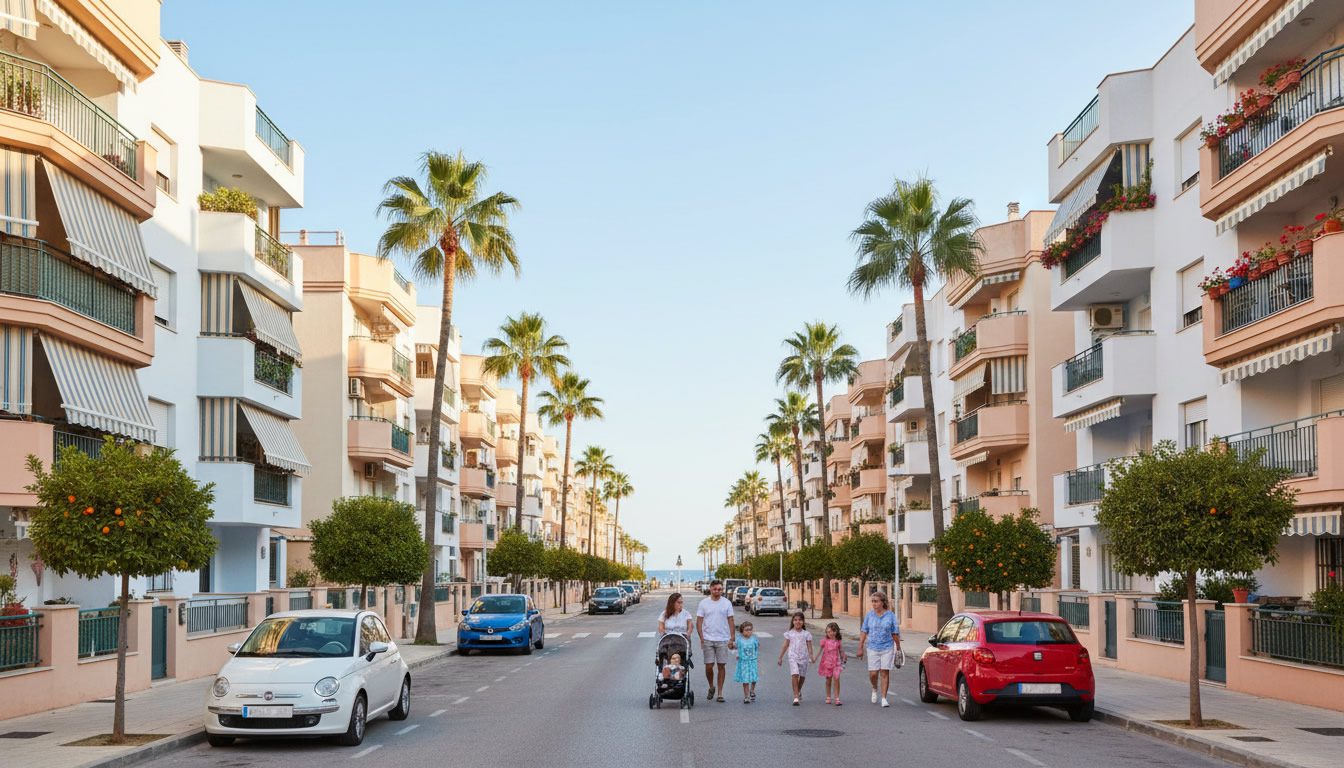
Torre del Mar, on Spain’s eastern Costa del Sol, combines coastal living with the convenience of a well-developed town. Its relaxed atmosphere, modern services, and proximity to the sea make it popular with families, professionals, and retirees. The neighbourhoods of Torre del Mar offer a range of housing options, from apartments in the centre to family villas in quieter residential areas.
In this guide we look at the neighbourhoods in Torre del Mar and what they offer in terms of housing options, average rental prices and terms and how to avoid being scammed by unscrupulous property owners.
Neighbourhoods in Torre del Mar
Centro Urbano (City Centre)
Centro Urbano is the heart of Torre del Mar, offering a lively atmosphere and easy access to amenities. Residents are within walking distance of shops, supermarkets, restaurants, and schools. Local parks such as Parque del Estanque and Parque de Andalucía provide large green spaces for recreation.
Housing in the city centre consists mainly of apartments, though some older houses remain on quieter streets. The central location makes it ideal for families who prefer to be close to schools, healthcare facilities, and public transport.
Poniente-Faro
Poniente-Faro stretches along the western edge of Torre del Mar’s promenade. It is the site of many new developments of apartments offering proximity to the beach and the centre of Torre del Mar.
There are some older properties in the neighbourhood – townhouses and apartments – which benefit from Avenida Toré Toré with its bars, restaurants and shops. Close to public transport, the beach and the heart of the town.
Paseo Maritimo de Levante
The neighbourhood of Paseo Maritimo de Levante is the eastern side of the promenade stretching towards Caleta de Vélez. A very popular location, it has a mix of apartments and houses, with schools, restaurants, shops, public transport and the beach all within easy reach.
There are a number of nurseries, primary and high schools in the area.
El Tomillar
El Tomillar is a peaceful residential area located slightly outside the town centre. It is known for its larger properties, including villas and townhouses with private gardens and pools. The neighbourhood suits families looking for space and a quieter environment while remaining close to the main amenities.
The area has several parks, such as Parque del Tomillar, and a good selection of schools. Sports clubs and leisure centres nearby provide activities for children and adults alike. Public transport links to the centre are frequent, and driving to schools, shops, or the beach takes only a few minutes.
Viña Málaga
Viña Málaga is one of the town’s newer developments, offering modern housing. The neighbourhood is built with families in mind, featuring safe streets, communal gardens, and playgrounds. Many properties have sea views due to the slightly elevated position of the area.
Several well-regarded schools are located nearby, and new facilities are planned as the community expands. Parque de Viña Málaga and local sports clubs offer plenty of outdoor and recreational options. The area’s design and infrastructure make it particularly suitable for families with young children.
You’ll also find Centro Comercial El Ingenio, the large shopping mall shared with neighbouring Vélez-Málaga, which includes supermarkets, cinemas, restaurants, and a wide range of retail outlets.
Caleta de Vélez
Located next to Torre del Mar, Caleta de Vélez offers a relaxed coastal lifestyle. The area is centred around its marina and family-friendly beaches, which are ideal for swimming, walking, and outdoor activities. The promenade links easily with Torre del Mar, allowing residents to enjoy seaside living with access to the town’s facilities.
Housing includes a mix of apartments, townhouses, and villas, many with sea views. Local schools are well rated, and there are several cafés and restaurants along the waterfront. Parque de la Marina provides green space and a playground for children.
Each of the neighbourhoods in Torre del Mar offers its own lifestyle and housing options. Families often choose areas such as El Tomillar or Viña Málaga for space and peace, while Centro Urbano, Poniente-Faro and Paseo Maritimo de Levante suit those who prefer to live closer to amenities and the beach.
Rental Prices in Torre del Mar
In August 2025, the average rental price in Torre del Mar was €12.41 per square meter (€/m²). This marked a significant 14.70% increase compared to October 2024 and was the peak average price for the area over the previous two years.
The rental market in Torre del Mar is dynamic and influenced heavily by seasonality and location, with distinct differences between long-term and short-term (holiday) rentals.
Neighbourhoods closer to the seafront command the highest rental prices, and indeed purchase prices. Likewise, a modern apartment with lift, parking and sea views will be more expensive than an older property further from amenities and the seafront.
Long-term rentals
Long-term rentals generally refer to contracts of a year or more. The rates for these vary, and specific listings on real estate portals like Idealista provide a good benchmark:
- A 90m², 3-bedroom apartment in the central area might list for around €1,250 per month.
- A 77m², 2-bedroom apartment further out would currently be available for approximately €825 per month, often including parking.
Short-term rentals
Short-termrentals, especially during the peak summer season (July and August), are considerably more expensive and often not listed as standard "per month" rates.
Rental Contracts and Legalities
Renting a home in Torre del Mar follows national Spanish regulations set out in the Ley de Arrendamientos Urbanos (LAU). This law governs most urban rental agreements and protects the rights of both tenants and landlords. Whether you are looking for a short-term stay or a long-term home, understanding the key elements of a Spanish rental contract will help ensure a smooth experience.
Contract Duration and Renewals
Under the LAU, rental contracts are generally signed for one year. If the landlord is a private individual, the agreement can automatically renew each year for up to five years, unless either party gives notice to end or modify it.
When the landlord is a company, this renewal period extends to seven years. After the initial term, tenants may often stay for an additional three-year extension unless otherwise stated in the contract.
Security Deposits
A one-month deposit is standard for residential leases, though landlords may ask for additional guarantees for longer contracts or furnished homes.
By law, landlords must lodge this deposit with the Andalusian regional housing authority, ensuring transparency and tenant protection. At the end of the tenancy, the deposit should be returned within 30 days, minus any justified deductions for damages or unpaid rent.
Property Standards and Repairs
Rental homes must meet basic habitability standards, including access to electricity, water, and safe living conditions.
- Landlords are responsible for major repairs affecting structure or essential utilities.
- Tenants are expected to handle minor maintenance, such as replacing light bulbs or cleaning filters.
If essential repairs are not completed after being requested, tenants can take formal steps to ensure compliance through local authorities or legal channels.
Notice Periods and Termination
Tenants may end their contract after six months, provided they give at least 30 days’ written notice.
If the landlord requires the property for personal use (for example, as a main residence), this must be clearly stated in the contract, and appropriate notice must be given.
Key clauses to review carefully
- Rent Payments: Most landlords request payment by bank transfer for transparency. This creates a verifiable record of payments.
- Rent Increases: Contracts may include annual rent updates linked to the Consumer Price Index (CPI). Tenants should confirm when and how rent adjustments apply.
- Utilities and Fees: Clarify which utilities (water, electricity, gas, community fees) are included in the rent and which must be set up in the tenant’s name.
- Privacy Rights: Landlords may not enter the property without prior notice and consent, except in emergencies. Ensure the contract includes a clear clause about property visits.
Legal Documentation and Requirements
A written contract is always recommended. It should outline the rent amount, payment schedule, deposit, contract duration, maintenance responsibilities, and any special terms.
Tenants are usually asked to provide identification, proof of income or employment, and sometimes references before signing. Some landlords also request contents insurance, which can be beneficial for covering personal belongings.
Regional Regulations
While the LAU applies nationally, Andalusia has additional rules concerning deposits, energy certificates, and property registration. Local authorities, such as Vélez-Málaga Town Hall, can provide region-specific information for new residents.
Common pitfalls to avoid
- Not reading the fine print: Ensure all clauses are clear and fair. Request plain-language explanations for any complex terms.
- Skipping the inventory: Always record the property’s condition with photos or a written checklist at the start of the tenancy.
- Deposit misunderstandings: Ask for proof that your deposit has been officially lodged with the regional authority.
- Confusion about notice or termination: Confirm how and when you can legally end the contract to avoid unexpected penalties.
Utilities and Service Connections - Torre del Mar
Setting up utilities in Torre del Mar is a straightforward process once you have the required documents and a Spanish bank account. Most properties are already connected to electricity, water, and internet, so in many cases you only need to transfer the existing contracts to your name. For new connections, additional steps and certificates may be required.
For rental properties, the owner of the property usually maintains the contract in their own name and arranges for payment with you as outlined in the rental agreement.
Required Documents
To set up or transfer utilities in your name, you will generally need:
- NIE or passport (for identification)
- Proof of address, such as a rental contract or title deed
- Spanish bank account (IBAN) for direct debits
- Certificado de empadronamiento, obtainable from the local Town Hall (Ayuntamiento de Vélez-Málaga), confirming your residence
Electricity
Electricity in Torre del Mar is supplied by several companies, with Endesa being the main provider in Andalusia. Other operators, such as Iberdrola and Naturgy, are also available.
For existing connections, you can simply transfer the supply contract to your name by contacting the supplier by phone or online. For new connections, you may need to provide a boletín eléctrico (installation certificate) issued by a qualified electrician.
When choosing a tariff, consider your expected consumption. Most suppliers offer variable-rate and fixed-rate options. Bills are usually issued monthly or bimonthly and can be paid automatically through your bank.
Gas
There is no mains gas network in Torre del Mar. Most homes use bottled gas (butano or propano) for cooking and heating water. Bottled gas can be purchased at petrol stations or arranged for home delivery through suppliers such as Repsol.
If your property has a private gas installation, ensure that it meets safety requirements and that inspections are carried out as required by law.
Water
The water supply in Torre del Mar is managed by Aqualia, which holds the municipal concession for the water service in the Vélez-Málaga district.
To transfer the contract or set it up in your name, you should contact Aqualia directly and provide your identification (NIE or passport), proof of address (rental contract or property deed), and Spanish bank IBAN for payments.
If there are outstanding bills or obligations tied to the existing contract, it is important to settle these before taking over the contract to avoid liability.
Internet and Telephone Services
Torre del Mar has reliable broadband coverage, with fibre optic available in most areas.
- Avatel and Axarnet are popular local providers offering competitive fibre and mobile packages.
- National operators such as Movistar, Vodafone, and Orange also serve the area, offering bundled deals that include internet, landline, and mobile services.
For new installations, you can expect a waiting period of several days to a few weeks depending on provider availability and location. Rural properties may require additional equipment, such as routers or boosters, to ensure strong signal coverage.
General Steps to Set Up Utilities
- Gather documents: Have your ID, proof of address, and bank details ready.
- Register your address: Obtain your certificado de empadronamiento from the Town Hall.
- Contact utility providers: Reach out to suppliers for electricity, water, and internet.
- Provide certificates if needed: For new connections, ensure you have the appropriate installation certificate (boletín).
- Set up direct debit: Provide your IBAN to each company to automate monthly payments.
Practical Tips
- Check for existing connections: Most resale or rental properties already have utilities connected. In this case, only the contract transfer is required.
- Start early: Setting up new connections can take time, especially in new developments or rural areas.
- Seek local advice: Ask neighbours, your real estate agent, or landlord which providers offer the best service and tariffs in your area.
- Use legal support if needed: For new-build properties or complex arrangements, your lawyer can handle utility setup as part of the completion process.
Avoiding Rental Scams in Torre del Mar
While Torre del Mar is generally safe and friendly, rental scams do occur. Scammers often target newcomers looking for long-term rentals online. Taking a few simple precautions can help you avoid costly mistakes.
Common Signs of Rental Scams
- Too good to be true: A beautiful beachfront flat at half the local rate is a red flag.
- Pressure to act fast: Scammers often claim someone else is “about to take it” to push you into sending money quickly.
- Requests for payment before viewing: Never pay a deposit, first month’s rent, or “reservation fee” before you’ve seen the property in person.
- Landlord abroad: Some fraudsters claim to be overseas and will “send keys by courier” after you pay.
- No verifiable ownership: If the person can’t show proof of ownership or a letting authorisation, walk away.
How to Protect Yourself
- Use reputable websites – Idealista, Fotocasa, Kyero, and Pisos.com list verified rentals. Avoid listings shared only on Facebook groups or classifieds unless you can verify the owner.
- View the property in person – Always visit or send a trusted local contact before signing or paying anything.
- Ask for documentation – Request the landlord’s DNI/NIE, title deed (escritura) or a recent utility bill showing their name and the address.
- Use a licensed agent – Torre del Mar has several reputable estate and rental agencies regulated by the Junta de Andalucía. They must have a registered API number or inmobiliaria licence.
- Check the rental contract – Ensure it’s written in Spanish and includes:
- Names and ID numbers of both parties
- Property address
- Duration of tenancy
- Monthly rent and payment method
- Deposit terms (usually one month’s rent)
- Inventory, if furnished
- Never pay by Western Union or cash – Always transfer to a Spanish bank account in the landlord’s or agency’s name.
- Be cautious with “short-term first” offers – Some scammers pose as holiday-let owners offering “trial months.” Verify the property exists through Google Street View or by contacting nearby businesses or neighbours.
- Consult local expat forums – Online groups for Torre del Mar or Vélez-Málaga can be helpful for checking if a landlord or property has complaints.
Local Help and Reporting Scams
If you suspect a scam or have already been defrauded:
- Report it to the Policía Nacional (local station in Vélez-Málaga).
- Keep copies of all messages, payments, and the listing URL as evidence.
- You can also inform Guardia Civil’s cybercrime unit via guardiacivil.es.